
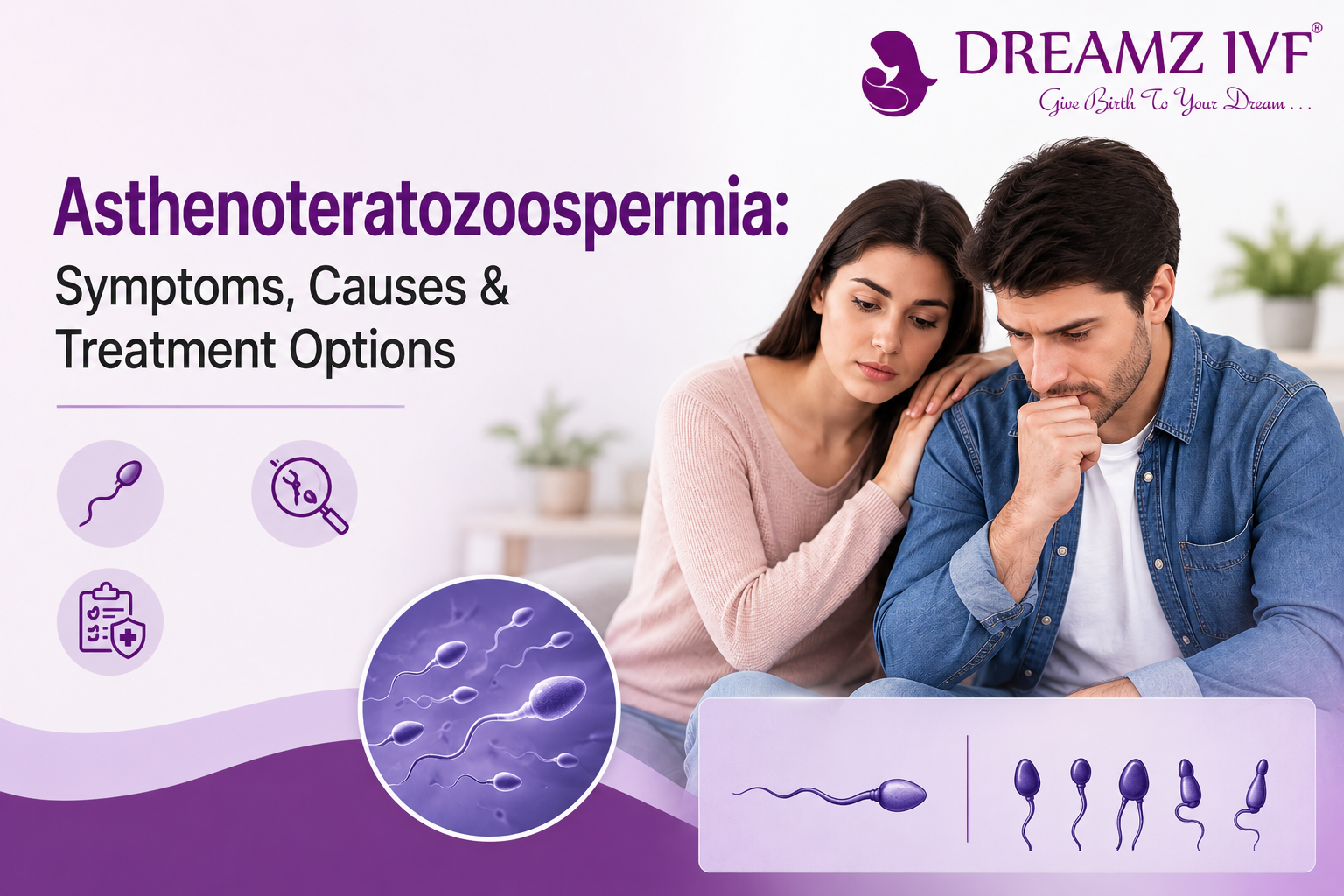
Low sperm motility and defective sperm morphology often lead to male infertility. This can be defined as asthenoteratozoospermia. It could reduce the viability of the sperm. This process has a high possibility of affecting the sperm’s ability to penetrate the ovum. This may lead to an inability to conceive. With accurate diagnosis and treatment, fertility will be restored in males and will guarantee a better chance of getting pregnant.
Symptoms
Since men may not exhibit physical symptoms or signs of asthenoteratozoospermia, the majority are unaware of the condition, and they only come to know when undergoing a fertility assessment. It is during a fertility assessment that males become aware about the condition while failing to conceive even while trying for the act of having an intercourse.
The first (and probably already late) signs of asthenoteratozoospermia are multiple unsuccessful pregnancies. However, it may be a complication.
Other types of asthenozoospermia symptoms occur, such as –
- Sperm motility is extremely poor – only a few are active
- A scrotum that appears swollen and thickened because of the engorgement of the veins of the scrotum.
- Hypoechoic or anechoic fluid surrounds the testicles with a hydrocele or pyocele (in the testicle, it is a fluid sac around the testicles).
- Having hormonal imbalances
- Pain in the pelvis and/or the lower abdomen
Causes
Asthenoteratozoospermia may be genetic, due to certain diseases, due to environmental factors or changes in lifestyle; hence, before starting therapy, the specific cause of asthenoteratozoospermia must be diagnosed in order to ascertain proper medication for the male affected.
Common Causes include:
● Genetic problems in sperm cause failure to form/develop a gene.
● Varicocele increases the testicular temperature and may damage the sperm.
● Endocrine disorders that interrupt the spermiogenesis process.
● Reproductive system infections.
● Smoking, consumption of alcohol, and drug abuse.
● Environmental contact, possibly including the presence of certain toxins.
Contat us Today : Comprehensive Evaluation of Infertile Male
Treatment Options
Medical treatment of a man suffering from asthenoteratozoospermia will be dependent on the degree of abnormality in sperms and cause, as appropriate medical treatment, modified lifestyle, and aided reproductive technologies would have a profound impact on the pregnancy success rate.
Effective treatments include:
● Better nutrition with good food
● Proper exercising of the body
● Non-indulgence in smoking or alcohol
● Intake of antioxidants to enhance the quality of the sperm
● Managing endocrine disorders and infections, as well as the surgical treatment of varicocele
● Use of assisted reproductive technologies such as ICSI or IVF in addition to sperm injection methods.
The above treatment options can be considered to be an effective treatment for asthenoteratozoospermia.
A Brighter Path Toward Parenthood
Asthenoteratozoospermia usually affects the ability to conceive. But don’t worry! There are several effective methods to address it. Early detection is essential to address the issue at the first go. You may go for lifestyle adjustments and medical interventions. Assisted reproductive techniques can prove to be helpful. It can boost sperm health and, therefore, increase fertility rates. Seeking professional advice from a fertility specialist will definitely help. It lets you determine the best course of action to deal with the issues. A specialist will also guide couples toward parenthood.

Also Read : Best Food to Improve Male Fertility
1 Comment
Comments are closed.