
Dreamz IVF offers advanced ICSI Infertility Treatment in Delhi using modern technology and experienced specialists. As a trusted infertility clinic, we provide personalized care to help couples overcome fertility challenges and achieve their dream of parenthood.
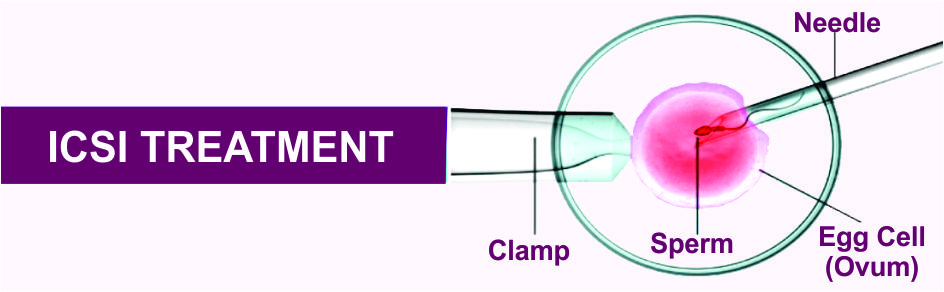
ICSI or Intracytoplasmic sperm injection is an advanced ART procedure carried out along with IVF process, where a single egg is injected with a single sperm with the help of a special micro-pipette. The only difference with conventional IVF and ICSI is the method of inseminating the egg with sperm. Once the eggs are retrieved, they are carefully denuded and one healthy sperm per egg is injected in the cytoplasm of egg without damaging it. ICSI requires a special micromanipulator and inverted microscope with magnification power up to 400 fold. At DREAMZ IVF, an extremely skilled embryologist performs ICSI with precision.
ICSI is a boon for males whose sperm count is very low, motility is poor or the sperm have to be recovered surgically from the epididymis or testes. ICSI is also carried out in cases with a history of failed fertilization in IVF, unexplained infertility, or where frozen sperm are to be used. ICSI improves chances of fertilization up to 80-90%. There are two advanced methods of ICSI according to the sperm selection method: PICSI & IMSI.
Physiological Intracytoplasmic Sperm Injection (P-ICSI)
P-ICSI or physiological ICSI is a method of sperm selection based on the maturity of the sperm. P-ICSI is carried out in a special petri dish containing tiny drops of hyaluronic acid, a substance which is naturally present in outer wall of egg. The sperms with higher fertility potential get attached to these drops and hence selected for injecting in the egg. P-ICSI is indicated in cases where DNA fragmentation index is high; previously failed IVF-ICSI or repeated miscarriages. P-ICSI technique increases the chances of pregnancy and decreases abortions. At DREAMZ IVF we carefully select candidates for P-ICSI.
Intracytoplasmic morphologically selected sperm injection (IMSI)
IMSI is one of the latest assisted reproductive technologies, where a special lens is used to increase the magnification up to 6000 fold. In conventional ICSI sperm are selected at 400x magnification. IMSI is specifically used where majority of sperms have structural defect. To select the best sperm for injection, they need to be carefully examined under such high magnification based on MSOME technology (Motile Sperm Organelle Morphology Examination). The IMSI technique increases the fertilization and pregnancy rates, whilst decreasing the miscarriage rate.
What is ICSI Treatment?
ICSI is often performed in conjunction with In Vitro Fertilization (IVF) to increase the chances of pregnancy. ICSI is a highly prevalent and valuable treatment option for couples struggling with male factor infertility, helping them achieve their dream of starting a family.
Who needs ICSI?
ICSI may be recommended in the following cases:
1. Low sperm count: If the man’s semen analysis shows a low sperm count, Intracytoplasmic Sperm Injection may be recommended by fertility doctors to increase the chances of fertilisation.
2. Poor sperm motility: If the sperm are not moving properly, they may have difficulty reaching and fertilising the egg. ICSI can be used to bypass this issue by injecting a single sperm directly into the egg.
3. Abnormal sperm shape: Sperm with abnormal shape or morphology may have difficulty penetrating the egg. ICSI can be used to overcome this issue by directly injecting a single sperm into the egg.
4. Previous vasectomy: If the man has had a vasectomy, ICSI can be used to retrieve sperm directly from the testicles or epididymis.
5. Other fertility treatments have failed: If other fertility treatments, such as intrauterine insemination (IUI), have failed to result in pregnancy, Intracytoplasmic Sperm Injection may be recommended as a next step.
ICSI Treatment Step by Step
The ICSI treatment for fertility involves several steps, from the initial assessment of the couple’s infertility issues to the implantation of the fertilised egg into the woman’s uterus. Here is a step-by-step guide to the ICSI treatment:
1. Initial consultation: The couple meets with a fertility specialist to discuss their infertility issues and determine if ICSI is a suitable treatment option.
2. Ovarian or ICSI stimulation: The woman undergoes ovarian stimulation to produce multiple eggs, using hormones such as follicle-stimulating hormone (FSH). It is also sometimes called ICSI stimulation.
3. Egg retrieval: The eggs are retrieved from the female partner’s ovaries using a minimally invasive procedure, typically under local anaesthesia.
4. Sperm collection: The man provides a semen sample, which is analysed in the laboratory to select the best quality sperm for injection. It should be emphasised that the collection of sperm and retrieval of eggs typically occur on the same day, and in preparation for the sperm collection, the male partner will be instructed to refrain from sexual intercourse or masturbation (with no ejaculation) for a period of two to three days beforehand.
5. Sperm preparation: The sperm is prepared for injection by washing and selecting the most viable sperm cells.
6. Injection of sperm: Using a fine needle, a single sperm (a healthy and viable one) is injected directly into each mature egg.
7. Fertilisation: The fertilised eggs are observed in the laboratory for signs of successful fertilisation and cell division. The embryos are allowed to develop in the laboratory for several days.
8. Embryo transfer: One or more embryos are then transferred into the woman’s uterus using a small catheter, typically 3-5 days after fertilisation.
9. Pregnancy testing: Approximately two weeks after the embryo transfer process, a pregnancy test is performed to determine if the procedure was successful.
What is the ICSI Treatment Success Rate?
ICSI is utilised in around 60% of all IVF procedures, and it has been shown that the likelihood of a successful pregnancy is comparable between ICSI and conventional IVF procedures. When performed with cutting-edge equipment and by world-class fertility doctors, fertilisation can be achieved in 50% to 80% of ICSI attempts.

Frequently Asked Questions
Q1. What is the full form of ICSI in IVF?
The ICSI full form in IVF is Intracytoplasmic Sperm Injection.
Q2. What is the difference between ICSI and IVF?
In IVF, eggs and sperm are combined in a lab for natural fertilization. In ICSI, a single sperm is injected directly into the egg. ICSI is mainly used for male infertility or failed IVF fertilization.
Q3. Which is better: ICSI vs IVF?
IVF is suitable for many couples, while ICSI is recommended for severe male infertility or previous fertilization failure. Your fertility specialist will advise the best option.
Q4. What is the ICSI IVF cost in Delhi?
The ICSI IVF cost in Delhi depends on factors such as medications, fertility tests, and additional procedures. The exact cost varies based on each couple’s treatment plan.
Q5. What are the ICSI IVF success rates?
ICSI IVF success rates depend on age, egg quality, sperm quality, and embryo health. In suitable cases, ICSI offers high fertilization rates and can improve the chances of pregnancy.
Q6. Who should consider ICSI treatment?
ICSI is recommended for men with low sperm count, poor sperm motility, abnormal sperm shape, surgically retrieved sperm, or couples with previous failed IVF fertilization.
Q7. Who should consider ICSI treatment?
ICSI is recommended for men with low sperm count, poor sperm motility, abnormal sperm shape, surgically retrieved sperm, or couples with previous failed IVF fertilization.
Q8. Can ICSI increase the chances of pregnancy?
Yes. ICSI improves fertilization by injecting a healthy sperm directly into the egg, which can increase the chances of pregnancy in suitable couples.
Q9. How can I book an appointment for Dreamz IVF?
You can book an appointment using this link: Book an Appointment or by calling 9013006060