
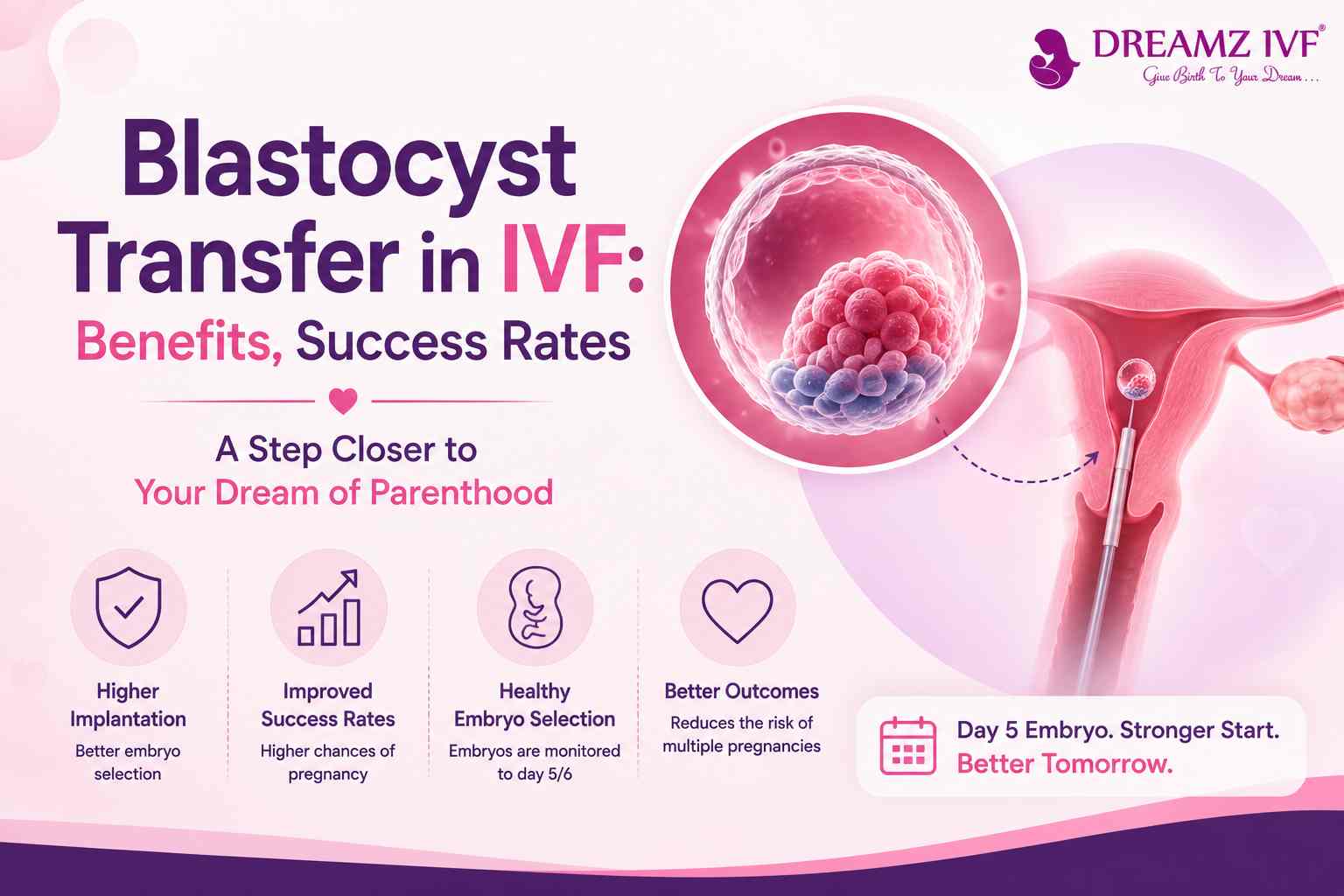
Blastocyst transfer is an advanced type of IVF treatment in which a 5/6 day-old embryo is transferred to the uterus. The embryo has advanced in growth, so the specialists can better judge the embryo’s maturity before transferring it. This method is becoming a more preferred one due to the enhancements in embryo selection and potential for implantation. Couples need to be aware of the advantages and the blastocyst transfer success rate to inform decision-making during their fertility treatment process.
What is blastocyst transfer?
Blastocyst transfer is an IVF process that involves the transfer of the IVF embryo (developed a couple of days after fertilisation) to the uterus of the woman. It is an embryo that is slightly more developed and can help the experts at the fertility clinic make a better selection of the most suitable embryo for the pregnancy.
Benefits of Blastocyst Transfer
1. Higher Implantation Potential
Blastocyst transfer increases chances of successful implantation, as typically it’s the more viable embryos which are usually transferred to increase embryo transfer success and successful pregnancy as compared to embryos transferred at the 3-day stage.
2. Improved Embryo Selection
Embryologists use the culturing of embryos to the blastocyst stage to determine the healthiest embryo for transfer. Having better embryo selection helps to increase the chances of successful treatment and helps to boost the blastocyst transfer success rate in many IVF cycles.
3. Lower chances of Multiple Pregnancy
Single blastocyst embryos have an optimum opportunity to be effectively implanted, and this not only minimises the chances of multiple births but also continues to be highly reliable in producing excellent results, therefore safeguarding the mother as well as the child as high as is feasible.
4. Improved Synchronization with the Uterus
The blastocyst has an organic growth cycle that permits it to develop and move right into the uterus within five to 6 days of the instant of conception. The blastocyst is therefore put in the womb to imitate natural reproduction in its truest form, therefore enhancing the chances of successful implantation and pregnancy.
5. Lower Chance of Transferring Non-Viable Embryos
Only embryos that continue to develop normally reach the blastocyst stage. This natural selection process can reduce the chance that the fertility specialists would transfer embryos with poor developmental potential in the IVF treatment, thereby improving the overall efficiency and effectiveness of the treatment.
6. Better Opportunities for Embryo Freezing
Vitrification is a modern freezing technique that is responsive to healthy blastocysts. Frozen Blastocysts can be preserved for later IVF treatments, as it provides the couple with extra possibilities of becoming pregnant without undergoing ovarian stimulation and retrieval again.
Blastocyst Transfer Success Rate
Whether a blastocyst transfer is successful depends on several factors, including the female’s age, the quality of her embryos, her uterus and what is causing her infertility. In short, a good blastocyst transfer success rate will have a higher likelihood of implanting than a day-2 or day-3 embryo. The success rates for different people and IVF clinics differ, but many clinics believe that the blastocyst transfer is an effective IVF technique and helps increase the chances for obtaining a healthy pregnancy.

Blastocyst Transfer Improves Success Rate!
In IVF, the ability to select, transfer, and enhance the viability of embryos has been greatly aided by the development of blastocyst transfer.
The blastocyst transfer success rate is high provided the age and embryo quality are right, but it is still a great procedure for many couples. It is advisable to choose the best approach in a person’s fertility treatment regimen by consulting an experienced fertility expert, and blastocyst transfer may be most appropriate.
Also Read : 10 Foods That Increase Fertility in Females