
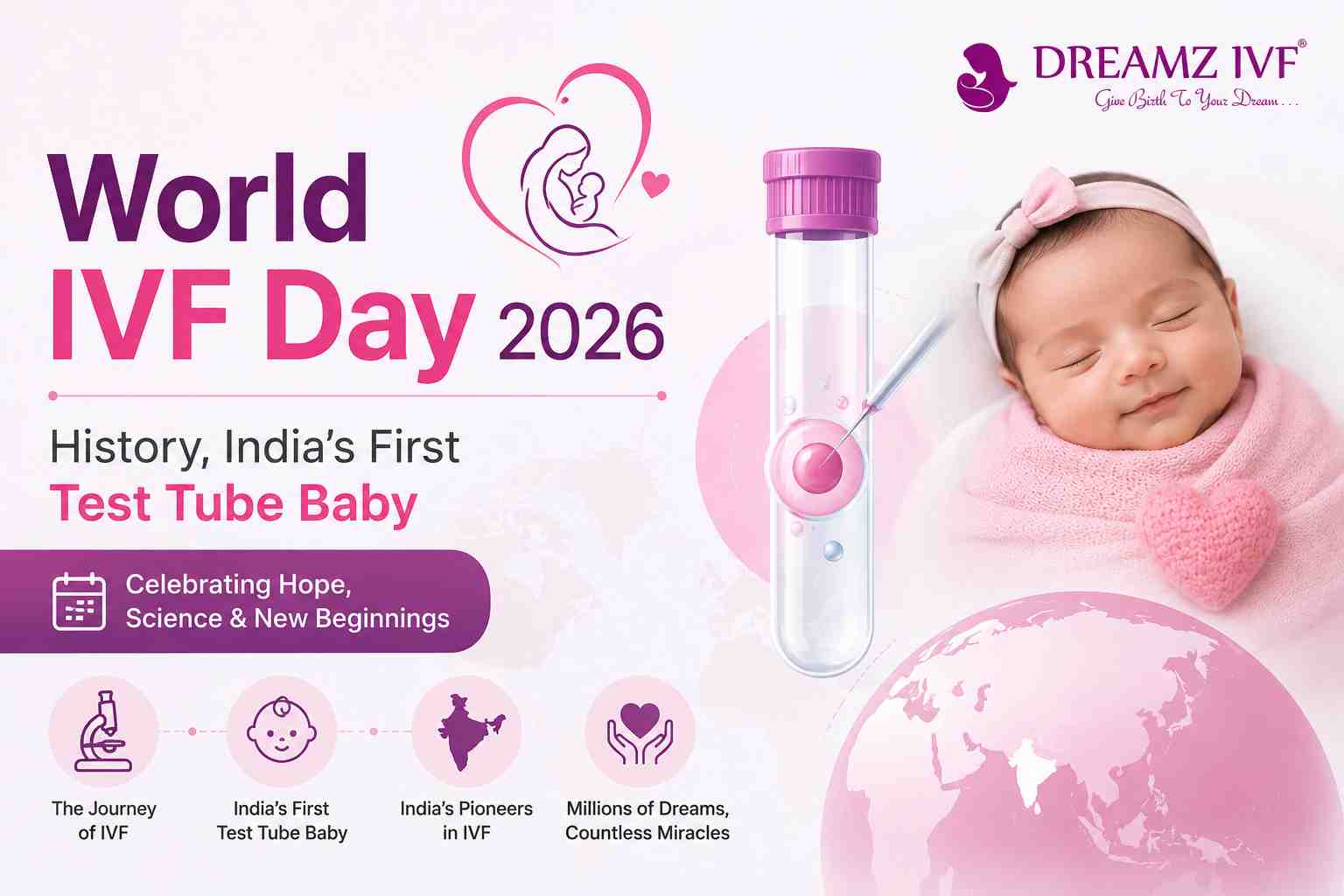
Every year on 25 July, the global medical community observes World IVF Day to commemorate one of the most significant milestones in reproductive medicine—the birth of the world’s first baby conceived through In Vitro Fertilization (IVF).
For millions of individuals and couples facing infertility, IVF has transformed what was once considered impossible into a reality. Since the birth of the first IVF baby in 1978, assisted reproductive technology has continued to advance, helping families across the world achieve their dream of parenthood.
World IVF Day is not only a celebration of scientific innovation but also an opportunity to raise awareness about infertility, encourage timely fertility evaluation, and recognize the dedication of fertility specialists, embryologists, and researchers who continue to improve reproductive healthcare.
World IVF Day 2026 Theme
While there is no officially declared global theme for World IVF Day 2026, fertility organizations worldwide are promoting the common message: “Making Parenthood Possible: Science, Hope, and You.”
History – The World’s First IVF Baby
World IVF Day traces its origins to one of the greatest achievements in modern medicine.
On 25 July 1978, Louise Joy Brown was born at Oldham General Hospital in England, becoming the world’s first baby conceived through In Vitro Fertilization (IVF).

This groundbreaking achievement was made possible through the pioneering work of:
- Dr. Robert G. Edwards
- Dr. Patrick Steptoe
- Jean Purdy, an embryologist whose contributions played a crucial role in the development of IVF.
The successful birth of Louise Brown demonstrated that IVF could safely help couples overcome infertility and paved the way for one of the most important advancements in reproductive medicine.
In recognition of this remarkable contribution, Dr. Robert Edwards was awarded the Nobel Prize in Physiology or Medicine in 2010 for the development of IVF technology.
India’s First Test Tube Baby: A Landmark Achievement
India made its own remarkable contribution to reproductive medicine shortly after the birth of Louise Brown.
On 3 October 1978, Durga, later known as Kanupriya Agarwal, became India’s first scientifically documented test tube baby, born just 67 days after the world’s first IVF birth.

This extraordinary achievement was led by Dr. Subhas Mukhopadhyay, a physician and researcher from Kolkata.
Despite successfully developing IVF technology under limited resources, Dr. Mukhopadhyay’s work was not widely recognized during his lifetime due to administrative and scientific controversies. Years later, experts carefully reviewed his research and acknowledged his pioneering contribution to assisted reproductive technology in India.
Today, Dr. Subhas Mukhopadhyay is widely regarded as one of the pioneers of IVF in India, and his work continues to inspire fertility specialists across the country.
How IVF Has Evolved Since 1978
Over the past four decades, IVF has advanced significantly, making fertility treatment safer, more precise, and increasingly successful.
Modern IVF now incorporates several advanced technologies, including:
- Intracytoplasmic Sperm Injection (ICSI)
- Blastocyst culture
- Embryo vitrification (freezing)
- Frozen Embryo Transfer (FET)
- Preimplantation Genetic Testing (PGT)
- Time-lapse embryo monitoring
- AI-assisted embryo selection
- Fertility preservation through egg and sperm freezing
These innovations have improved treatment outcomes while allowing fertility specialists to provide more personalized care based on each patient’s medical condition.
Why World IVF Day Is Important
World IVF Day is much more than the celebration of a medical breakthrough. It serves as a reminder that infertility is a recognized medical condition affecting millions of people globally and that effective treatment options are available.
The day aims to:
- Increase awareness about infertility and reproductive health
- Encourage couples to seek timely fertility evaluation
- Reduce myths and social stigma associated with infertility
- Promote evidence-based fertility treatments
- Recognize the contributions of fertility specialists, embryologists, and researchers
- Inspire hope among individuals and couples planning their parenthood journey
When Should You Consult a Fertility Specialist?
Many couples delay seeking medical advice, believing infertility will resolve naturally. However, early evaluation can improve treatment outcomes.
You should consider consulting a fertility specialist if:
- You are below 35 years of age and have been trying to conceive for more than 12 months.
- You are above 35 years of age and have been trying for six months without success.
- You have irregular menstrual cycles or known reproductive disorders.
- You have experienced recurrent pregnancy loss.
- Either partner has a diagnosed fertility-related condition.
Early diagnosis helps identify the underlying cause and allows fertility experts to recommend the most appropriate treatment.
Looking Ahead: The Future of IVF
Reproductive medicine continues to evolve rapidly.
Emerging technologies such as artificial intelligence, advanced embryo assessment, genetic screening, and precision reproductive medicine are making fertility treatment increasingly personalized and effective.
As research continues, IVF is expected to become even more accessible, efficient, and patient-centred, offering new hope to future generations of aspiring parents.
IVF Treatment in India
India has emerged as a leading destination for IVF treatment, offering advanced reproductive technologies, experienced fertility specialists, and world-class medical facilities. With continuous advancements in assisted reproductive technology (ART), IVF has become a safe and effective treatment option for many couples and individuals facing infertility.

If you are planning to start your fertility journey, seeking timely guidance from a qualified fertility specialist can help identify the underlying cause of infertility and determine the most suitable treatment approach. Understanding the IVF process, success factors, and available treatment options is an important first step toward making informed decisions about your reproductive health.
Also Read : How to Choose the Best IVF Center in Delhi
Frequently Asked Questions (FAQs)
1. Why is World IVF Day celebrated?
World IVF Day is celebrated every year on 25 July to commemorate the birth of Louise Joy Brown, the world’s first baby conceived through IVF.
2. What is the theme of World IVF Day 2026?
While there is no officially declared global theme for World IVF Day 2026, fertility organizations worldwide are promoting the common message: “Making Parenthood Possible: Science, Hope, and You.”
3. Who was the world’s first IVF baby?
Louise Joy Brown, born on 25 July 1978 in England, is recognized as the world’s first baby conceived through In Vitro Fertilization (IVF).
4. Who was India’s first test tube baby?
Durga (Kanupriya Agarwal), born on 3 October 1978, is recognized as India’s first scientifically documented test tube baby.
5. Who developed IVF in India?
Dr. Subhas Mukhopadhyay pioneered IVF technology in India and is widely regarded as one of the founding figures of assisted reproductive medicine in the country.