
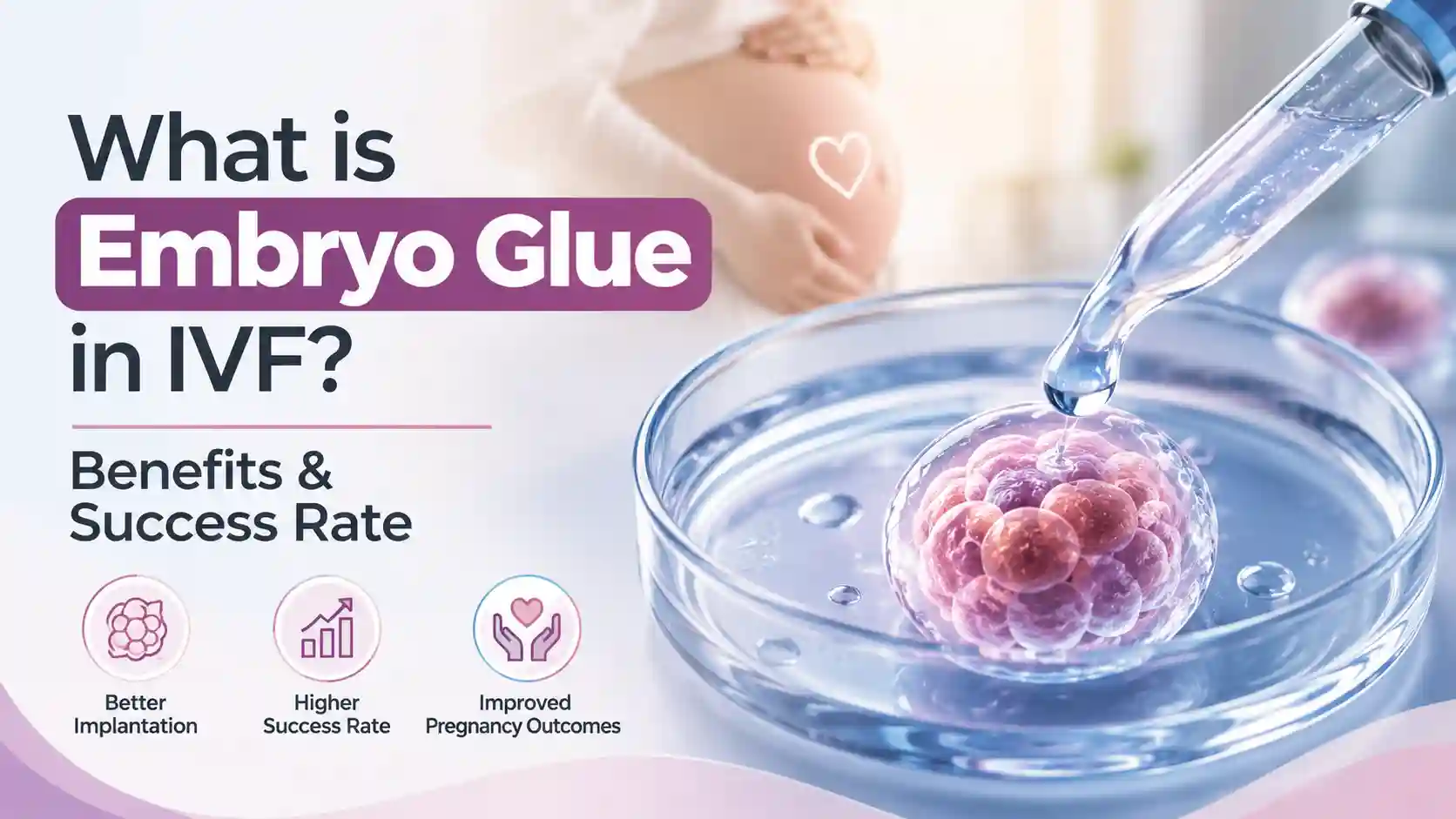
If you are going through IVF, you probably have heard a lot of questions about what happens during embryo transfer. After the appointments, medications, and waiting, it’s natural to wonder if there is anything that can help an embryo implant successfully in the uterus. You might have heard your fertility specialist mention embryo glue. The name can sound a little unusual, but it is simply a specialized medium used during embryo transfer. It contains hyaluronic acid, a substance naturally found in the body that might help support the conditions during implantation.
What is embryo glue in IVF?
Embryo glue is a specialized culture medium used to prepare an embryo before it is transferred into the uterus during IVF treatment. During IVF your eggs are fertilized in a laboratory, and the resulting embryos are monitored as they develop. When the embryo is ready for transfer, the fertility team places it in the medium before transferring it into the uterus. One of the main ingredients is hyaluronic acid, also known as hyaluronan. The substance is usually present in several parts of your body, including the reproductive tract. Despite its name, embryo glue does not physically adhere the embryo to the uterus. Implantation is a biological process that depends on several factors, including embryo development and uterine lining status.
What are the benefits of embryo glue in IVF?
The main reason some fertility clinics use embryo glue is to explore whether the transfer medium can improve the chances of successful pregnancy.
1. Might support implantation
The hyaluronic acid-enriched medium might help create suitable conditions for the embryo during transfer.
2. Might improve pregnancy outcomes
Some studies have found higher pregnancy rates when hyaluronic acid-enriched transfer media are used.
3. Might increase live birth rates
Research suggests these media could improve the chance of having a baby in some other treatment settings.
What is the success rate of embryo glue in IVF?
This is one of the biggest questions for couples considering the treatment. The honest answer is that there is no single success rate for everyone. The figures here are just research estimates and do not mean that every patient using embryo glue has a 37% to 44% chance of live birth, as individual outcomes might vary.
A Cochrane systematic review of 26 studies involving 6,704 women found that embryo transfer media with higher concentrations of hyaluronic acid probably improved live birth rates compared with media with low or no concentrations of hyaluronic acid. In the review’s illustrative estimates, the live birth rate of 33% could increase to about 37%-44%.
Embryo glue is a specialized medium used during IVF embryo transfer. Research suggests that hyaluronic acid-enriched transfer media might improve live birth rates in some circumstances. But the benefits are not guaranteed, and the evidence does not support that every patient will benefit equally. If you are considering embryo glue, have an open conversation with your fertility specialist about your treatment history and the possible benefits. You don’t need to choose every available add-on to give yourself the best possible care.
Also Read : The Pros and Cons of Test Tube Baby Treatment