
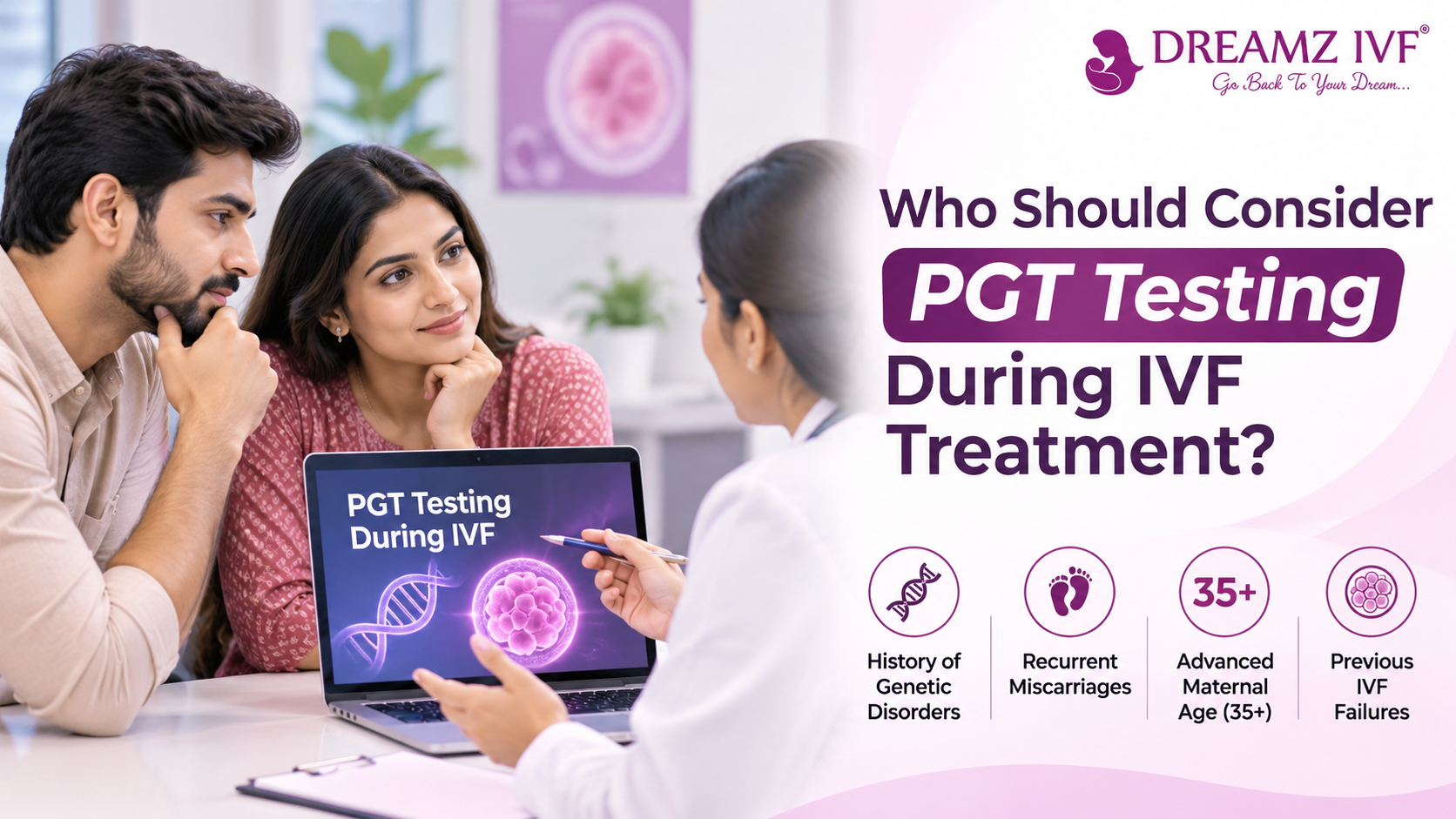
Starting IVF treatment often comes with many decisions, and some can feel overwhelming. You might hear your fertility specialist mention PGT testing and wonder whether it is necessary, especially when you are already going through so much to achieve a pregnancy. PGT stands for preimplantation genetic testing. It involves testing cells from an IVF embryo for specific genetic or chromosomal changes before the embryo is transferred to your uterus. Who should consider PGT testing during IVF treatment? The answer depends on factors like your family history, the risk of passing on a related condition, and individual fertility circumstances.
What is PGT testing in IVF?
Preimplantation genetic testing is a technique used to examine genetic material from embryos created through IVF before an embryo is transferred into your uterus. The aim is to identify certain genetic chromosomal changes that might affect your pregnancy or child’s health. Your fertility specialist will recommend a particular type of testing based on your medical history and the reason for considering genetic testing.
There are three main types of PGT, and each serves a different purpose.
- PGT-A (aneuploidy testing): Checks whether an embryo has an abnormal number of chromosomes.
- PGT-M (monogenic testing): Looks for a specific inherited genetic condition, such as cystic fibrosis or thalassemia, when the relevant genetic change is known.
- PGT-SR (structural rearrangement testing): Checks for certain chromosome changes, such as translocations, that may affect reproductive outcomes
Who should consider PGT Testing during IVF Treatment?
PGT might be worth discussing with the fertility specialist in certain situations. The decision depends on the type of genetic risk involved, your reproductive history, and what testing can realistically tell you.
Couples with unknown inherited genetic risk
If you or your partner carry a genetic variant associated with a serious inherited disorder, the test might help identify embryos affected by the specific condition. Genetic counselling can also help you understand the inheritance pattern.
Individuals with unknown chromosomal rearrangements
You might carry chromosome changes that can increase the risk of an unbalanced chromosome arrangement in an embryo. PGT testing can help you identify embryos without the specific imbalance being investigated.
Couple of experienced recurrent pregnancy loss
Some miscarriages are associated with chromosome abnormalities. Depending on the circumstances and investigation results, a specialist might discuss PGTA. But testing is not automatically recommended for everyone who has experienced a miscarriage, as its ability to improve overall outcomes remains uncertain.
What should you discuss with your fertility specialist?
Before deciding on PGT, you need to ask which type of testing has been proposed and why it is useful for you. It is also worth discussing the test’s accuracy and limitations. PGT does not detect every possible genetic condition, and errors can occur.
So PGT testing during IVF can be a valuable option for you if you have a known inherited genetic risk or certain chromosomal abnormalities. If you are planning IVF, speak with your fertility specialist about your medical history and treatment goals before deciding
Also Read : IVF EMI & Financing Options at 0% Interest