
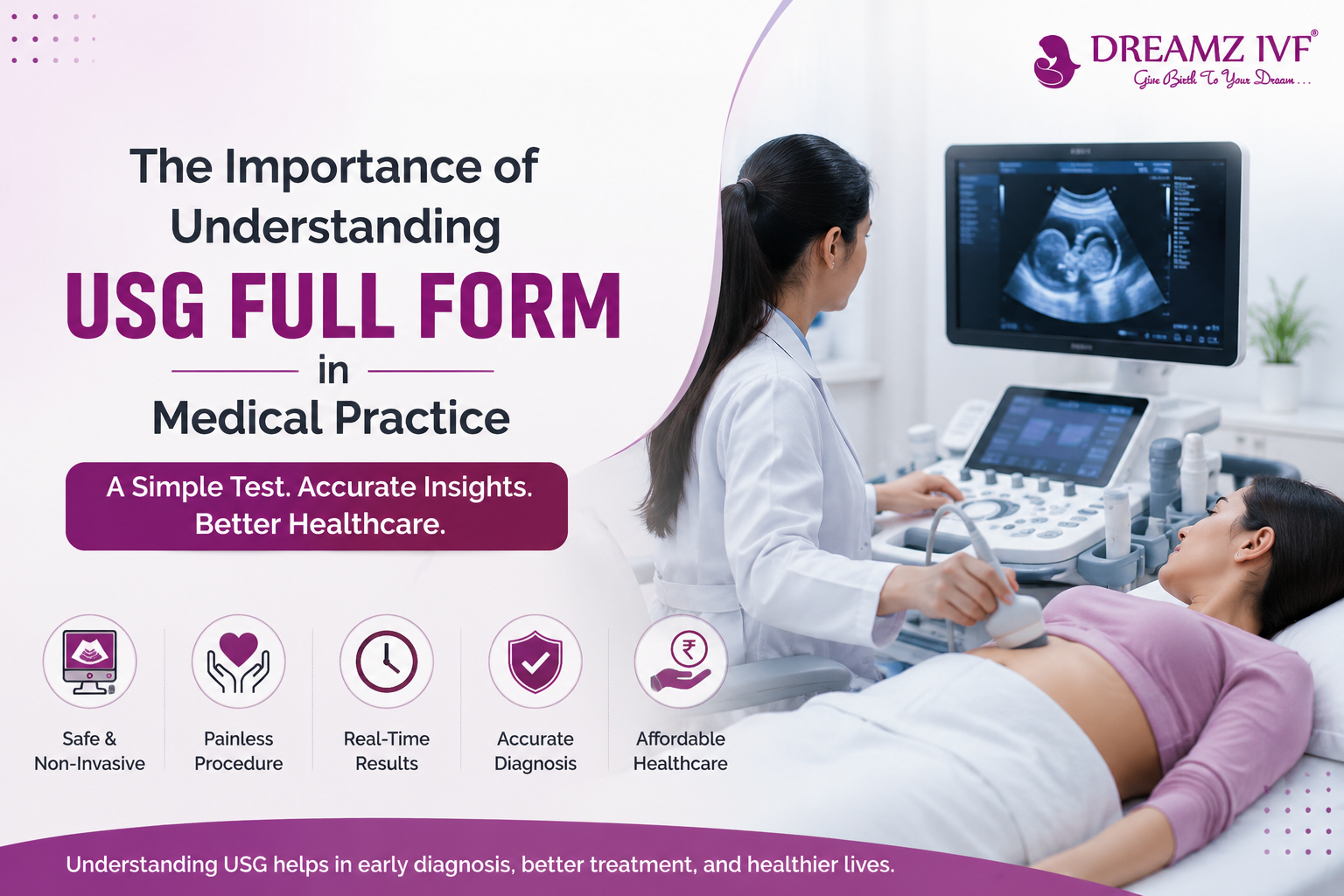
USG Full form in Medical : USG stands for Ultrasonography (Ultrasound). It is a medical imaging test that uses sound waves to create images of internal body organs and tissues. Since it does not use radiation, USG is considered a safe and painless diagnostic method widely used in healthcare.
Doctors commonly recommend USG to monitor pregnancy, examine abdominal organs, evaluate the uterus and ovaries, and detect conditions such as cysts, stones, or tumors. The test provides real-time images, helping doctors diagnose medical conditions accurately and plan appropriate treatment.
What is USG in Medical Terms?
The full form of USG in medical practice is Ultrasound Sonography. It is a non-invasive imaging technique used to observe internal body structures without surgery or cuts. During the procedure, a device called a transducer sends sound waves into the body. These waves bounce back and create images on a computer screen.
A gel is applied to the area being examined to improve image quality. The procedure is quick, comfortable, and usually completed within a few minutes.
Common Uses of USG
Ultrasound is used in many medical departments for diagnosis and monitoring. Some of the major uses include:
- Monitoring pregnancy and fetal growth
- Checking blood flow through arteries and veins
- Evaluating the liver, kidneys, gallbladder, and pancreas
- Detecting cysts, tumors, or infections
- Examining breast lumps
- Studying thyroid gland conditions
- Diagnosing urinary tract problems
- Guiding biopsy procedures
- Assessing joint inflammation and soft tissue injuries
Explore : Dr. Shikha – Test Tube Baby Specialist
Types of USG Scans
Pregnancy Ultrasound
Pregnancy ultrasound helps monitor the baby’s development and overall well-being. It also helps estimate the expected delivery date (EDD) and detect complications early.
Abdominal USG
This scan examines abdominal organs such as the liver, spleen, pancreas, gallbladder, and kidneys. It helps detect stones, infections, swelling, or organ abnormalities.
USG KUB
KUB stands for Kidney, Ureter, and Bladder. This ultrasound checks the urinary system and helps diagnose kidney stones, urine blockage, or bladder issues.
Transvaginal Ultrasound (TVS)
TVS is used to examine female reproductive organs, including the uterus, ovaries, cervix, and fallopian tubes. It is commonly recommended in fertility and gynecology treatments.
Doppler USG
Doppler ultrasound measures blood flow inside arteries and veins. It helps detect circulation problems, blood clots, or blocked vessels.
High-Resolution USG (HRUSG)
This type of ultrasound provides highly detailed images of tissues and organs. It is often used for thyroid, muscle, and joint evaluations.
Transrectal Ultrasound
This scan is mainly used in men to examine the prostate gland and nearby tissues.
Advantages of USG
Safe Procedure
USG does not use harmful radiation, making it safe for both adults and pregnant women.
Non-Invasive
The procedure does not involve surgery, cuts, or stitches.
Painless
Ultrasound scans are generally painless and comfortable.
No Recovery Time
Patients can return to their normal activities immediately after the test.
Affordable
Compared to many imaging techniques, ultrasound is usually more cost-effective.
Portable Technology
Modern ultrasound machines are portable, allowing easy testing in hospitals and clinics.
Why Doctors Recommend USG
Doctors prefer USG because it provides quick and accurate imaging without exposing patients to radiation. It is especially useful for pregnancy care, abdominal examinations, fertility evaluations, and detecting internal abnormalities.
Conclusion
USG, or Ultrasonography, is one of the most commonly used diagnostic tools in modern medicine. It is safe, painless, affordable, and highly effective for examining internal organs and monitoring various medical conditions. Whether for pregnancy care, abdominal scans, or blood flow analysis, USG plays an important role in early diagnosis and treatment planning.
FAQs
What is the full form of USG?
USG stands for Ultrasonography or Ultrasound Sonography.
Is USG safe during pregnancy?
Yes, ultrasound is considered safe during pregnancy because it does not use radiation.
Does a USG test cause pain?
No, USG is generally painless and non-invasive.
Why do doctors ask patients to drink water before USG?
A full bladder helps improve image clarity during certain ultrasound scans, especially pelvic examinations.
What is USG KUB?
USG KUB is an ultrasound scan of the kidneys, ureters, and bladder.