
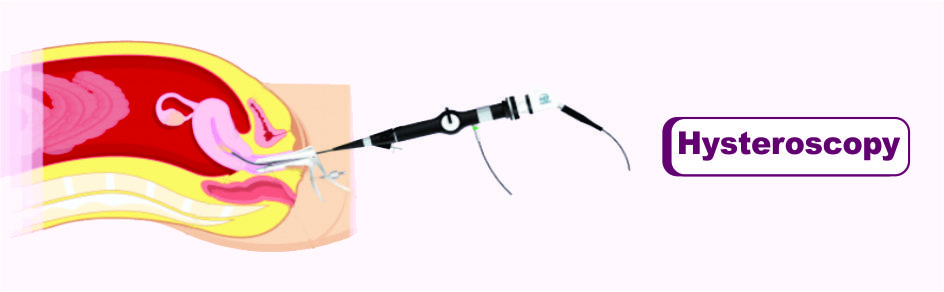
Dreamz IVF offers advanced hysteroscopy surgery in Delhi using modern technology and experienced specialists. As a trusted fertility clinic, we provide safe, minimally invasive procedures with personalized care to diagnose and treat uterine conditions effectively.
Hysteroscopy is gold standard in the evaluation of uterus. Evaluation of uterine cavity is a must in patients with:
- Infertility
- Abnormal uterine bleeding
- Repeated miscarriages
- Recurrent IVF failures
- Hysteroscopy enables direct visualization of endometrial cavity and allow us to simultaneously correct the abnormality. Pre IVF Hysteroscopy significantly improves the chances of implantation.
- Polypectomy: Polyps are small endometrial growths which hinder implantation and may cause abnormal uterine bleeding.
- Myomectomy: The submucous fibroid which grows inside the uterus may not be accessible to laparoscopy, hence removed through hysteroscopy.
- Septal resection/ Metroplasty: To correct congenital malformation of uterus where uterus is divided partially or completely by a septum or the cavity is T shaped.
- Hysteroscopic Synechiolysis: Synechia are the bands of scar tissue which developed as a result of previous pelvic infection or D&C for abortion. Synechia reduce the size of endometrial cavity and negatively affect implantation. By synechiolysis the size and shape of uterine cavity can be restored.
- Cornual Catheterisation: When the tubes are blocked from the cornual ends, a guide-wire is inserted under hysteroscopic guidance to open the blocked tubes.
- Removal of foreign body or impacted Cu-T, endometrial ablation under Hysteroscopic guidance.